
Reviews
Garden Bloom Tile Puzzle offers a refreshingly low-stress matching experience. The core swap-and-match mechanic is easy to grasp, but the level objectives keep each stage feeling fresh. Visuals are clean and cheerful, avoiding the busy look of some puzzle games. The gradual difficulty curve means new players won't feel overwhelmed, while veterans will find plenty of challenge in later levels. It is a solid choice for anyone seeking a relaxing brain teaser that respects their time.
Description
Core Matching Mechanics
Players interact with a grid filled with colorful flower tiles. The primary action involves swapping two adjacent tiles to create a line of three or more identical blooms. When such a line forms, those tiles vanish from the board, and points are awarded. This simple rule set allows anyone to start playing immediately, but each level introduces specific objectives that require more than just random swapping. For instance, a level might ask players to clear a certain number of a particular flower type or to remove tiles from a designated area. The limited move count per level adds a layer of strategy, as every swap must contribute toward the goal.
Level Structure and Progression
The game offers a large set of stages that gradually increase in complexity. Early levels serve as a tutorial, teaching the basics of tile matching and objective completion. As players advance, they encounter new tile types, obstacles, and more restrictive move limits. Some levels require players to clear tiles in a specific order, while others introduce barriers that must be broken before certain tiles can be reached. This progressive difficulty ensures that the game remains engaging without becoming frustrating. Players can replay completed levels to improve their score or to practice strategies for tougher stages.
Visual Style and Atmosphere
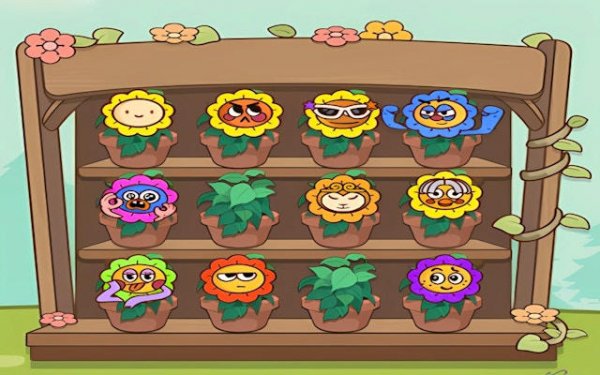
The visual presentation centers on bright, cheerful flower illustrations set against soft background colors. Animations are smooth and subtle, with tiles gently disappearing when matched and new tiles falling into place. The overall aesthetic avoids clutter, keeping the focus on the puzzle grid. This clean design reduces visual fatigue during extended play sessions. The sound design, if present, likely features light, pleasant tones that complement the relaxing mood. Together, the visuals and audio create an environment that feels more like a peaceful garden than a competitive game.
Strategic Approaches for Players
Success in this puzzle game often comes from thinking a few moves ahead. Instead of making the first match they see, experienced players scan the board for potential chain reactions. A single swap that creates multiple matches can clear many tiles at once, conserving moves and earning bonus points. Another useful tactic is to focus on the level objective rather than simply clearing tiles. For example, if the goal is to remove a specific flower type, players should prioritize matches that include that flower. Using any available power-ups at the right moment, such as when obstacles block progress, can also turn a difficult board into a manageable one.








Comments
Sign in to comment
You must be logged in before posting a review or rating.
No account? Create one
No comments yet. Be the first to comment!